


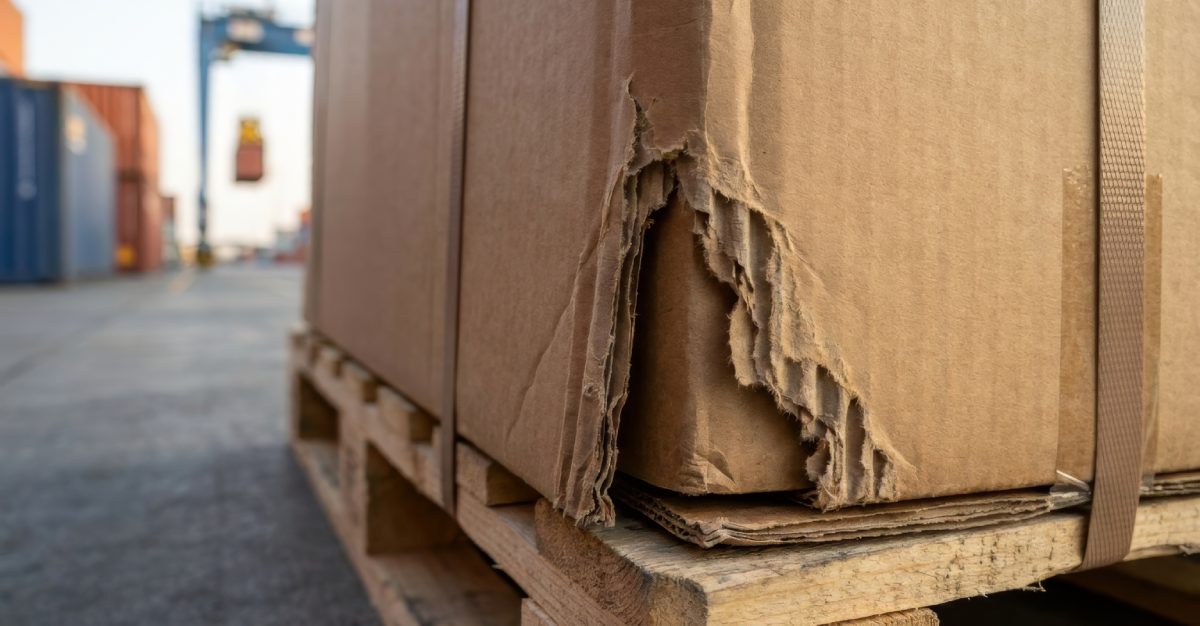


Most conversations about an LTL damage claim begin after something has already gone wrong. A shipment arrives with crushed cartons, broken products, or a shifted pallet, and attention immediately turns to the carrier. Was the freight mishandled? Who is responsible? Will the claim be approved?
Those are reasonable questions, but they’re often the wrong place to start. By the time an LTL damage claim exists, the opportunity to prevent it has already passed.
Unlike truckload freight that typically stays on one trailer from pickup to delivery, less-than-truckload (LTL) freight moves through a network designed to consolidate shipments from many customers. Along the way, freight is loaded, unloaded, sorted, staged, transferred between trailers, and ultimately placed on a local delivery vehicle for final delivery.
That operating model is what makes LTL an efficient and cost-effective shipping option, but it also creates more handling events than a typical truckload shipment. Packaging that appears adequate when it leaves the dock may not be engineered for everything that happens before it reaches its destination.
For this reason, the most effective way to reduce damage isn’t just selecting a different carrier. It involves improving packaging, pallet construction, and shipment preparation before freight ever enters the LTL network.
What Actually Happens to LTL Freight After Pickup
Many shippers never see what happens once a driver closes the trailer doors at pickup. From that point on, an LTL shipment may pass through multiple facilities before final delivery.
A typical shipment journey includes:
- Pickup at the shipper’s facility
- Transportation to the origin terminal
- Unloading and cross-docking
- Loading onto a linehaul trailer
- Transportation to a destination terminal
- Another cross-dock operation
- Loading onto a local delivery truck
- Final delivery to consignee
Every transfer introduces another opportunity for the shipment to experience normal handling stresses.
These include:
- Forklift contact or pallet strikes
- Multiple loading and unloading cycles
- Freight stacked beside or against other shipments
- Heavy freight placed on lighter freight
- Trailer vibration during transit
- Compression from surrounding freight
- Shifting caused by acceleration or braking
- Temporary exposure to weather while staged on loading docks
None of these situations necessarily indicate careless handling. They’re part of how modern LTL networks efficiently move thousands of shipments every day.
This also explains why LTL damage rates are typically higher than on full truckload shipments. According to FleetWorks, LTL freight experiences annual damage rates ranging from 2% to 5%, compared with 0.5% to 2% for truckload, largely because LTL shipments are handled multiple times throughout their journey.
The takeaway: An LTL shipment should be packaged for repeated handling, not for the first truck it rides on.
Why a Pallet That Survives One Dock Pull Can Fail in an LTL Network
Many pallets are built with only the first loading event in mind. They leave the warehouse looking stable and secure, but the cumulative effects of multiple transfers begin to expose weaknesses that weren’t obvious at origin:
- Stretch wrap gradually loosens
- Boxes begin shifting
- Corners absorb repeated impacts
- Mixed products settle unevenly
- Loads begin leaning
The pallet may remain standing through several terminals before finally failing during a later transfer. That’s one of the defining characteristics of LTL damage. It often isn’t caused by a single catastrophic event. Instead, small structural weaknesses compound with each handling until the shipment can no longer maintain its integrity.
A pallet engineered for a direct truckload shipment may perform perfectly when it stays on one trailer. The same pallet may struggle after several cross docks, multiple forklift moves, and repeated trailer loading cycles. This is why packaging should be designed around the realities of the transportation network, not just the product itself.
Five Packaging Decisions That Determine Whether Freight Arrives Intact
Preventing damage starts long before freight reaches a carrier’s terminal. Small improvements in packaging frequently have a greater impact on shipment integrity than switching carriers.
Use the Right Stretch Wrap
Stretch wrap film does far more than keep cartons together. It provides the containment force that keeps the load stable throughout transportation.
Proper wrap should:
- Extend from the pallet base to the top of the load
- Provide adequate containment force
- Match the shipment’s weight and dimensions
- Remain secure throughout multiple handling events
Industry testing standards, including ASTM testing methods for stretch film performance, help manufacturers evaluate whether packaging can withstand transportation stresses.
Protect the Corners
Corner boards and top caps significantly improve load stability. They help:
- Distribute compression forces
- Prevent crushed corners
- Reduce carton movement
- Improve overall pallet rigidity
These relatively inexpensive materials often prevent damage that would otherwise result from stacking pressure or repeated handling.
Build Stable Pallets
The way cartons are stacked matters just as much as the pallet itself. Whenever practical:
- Avoid excessive pallet overhang.
- Use stack patterns that maximize stability.
- Maintain even weight distribution.
- Prevent cartons from extending beyond pallet edges.
An unstable pallet may survive pickup yet become progressively weaker as it moves through the network.
Package Mixed SKUs Carefully
Mixed-product pallets require additional attention. Heavy cartons should remain on the bottom. Similarly sized cartons should be grouped together whenever possible. Odd-shaped products should be stabilized to prevent shifting during transit.
An uneven center of gravity increases the likelihood that freight will lean, settle, or collapse after repeated transfers.
Make Labels Easy to Find and Scan
While labels don’t prevent physical damage, they play an important role in reducing handling errors. Shipping labels should:
- Appear on multiple sides of the pallet when appropriate
- Remain visible after stretch wrapping
- Include clear consignee information
- Feature scannable barcodes
Distribution testing standards such as ISTA 3B evaluate packaging performance under conditions that simulate the handling environments commonly encountered in parcel and LTL distribution systems. While not every shipment requires formal testing, these standards illustrate an important principle: packaging should be designed for the distribution environment, not just for storage.
The strongest damage prevention strategy begins at the shipping dock. Investing a small amount of time in pallet construction, load stability, and packaging integrity often eliminates problems that would otherwise surface several terminals later.
Why Winning an LTL Damage Claim Is Rarely the Best Outcome
Once freight arrives damaged, the focus naturally shifts to filing an LTL damage claim. While carriers have established claims procedures and legitimate claims are paid every day, the process is rarely quick or simple. Even a successful outcome doesn’t erase the operational disruption caused by the damaged shipment.
A typical claims process involves:
- Documenting the damage at delivery
- Taking photographs of the shipment and packaging
- Preserving the freight for inspection, if requested
- Providing shipping documents and proof of value
- Undergoing a carrier investigation
- Negotiating settlement, if necessary
Just as importantly, carriers evaluate more than the condition of the freight itself. They also examine whether the shipment was packaged appropriately for the rigors of LTL transport. If packaging failed to meet generally accepted shipping practices or contributed to the damage, that may affect the carrier’s determination of liability.
Even when a claim is ultimately approved, the shipper has already absorbed costs that reimbursement often doesn’t fully address. Hidden costs may include:
- Administrative time spent preparing claim documentation
- Customer service resources devoted to resolving the issue
- Replacement inventory and expedited reshipments
- Delayed invoicing or payment
- Production disruptions
- Lost customer confidence
- Damage to long-term business relationships
In many cases, the most significant cost isn’t the damaged product itself but the negative impact on the customer experience. This is why successful shippers don’t measure performance by how efficiently they manage claims, but by how infrequently claims occur in the first place.
The Packaging Conversation Should Happen Before the Freight Moves
Damage prevention starts well before a pallet reaches the loading dock. It begins during shipment planning. Rather than asking, “Who pays if this shipment gets damaged?” shippers should be asking:
- Is this pallet built to withstand multiple cross-dock transfers?
- Will it remain stable after repeated forklift handling?
- Does the packaging match the product’s weight and fragility?
- Are mixed products stacked to maintain a stable center of gravity?
- Would a relatively small investment in packaging materials significantly reduce damage risk?
These questions shift the conversation from assigning responsibility after the fact to minimizing the likelihood of damage in the first place. They also recognize an important reality of LTL shipping: packaging is not separate from transportation planning.
A pallet engineered specifically for the LTL environment is better equipped to withstand routine loading, unloading, staging, vibration, compression, and repeated movement through the carrier’s network. That proactive approach reduces claims while improving delivery performance, customer satisfaction, and overall transportation efficiency.
Prevent the Claim Instead of Managing It
An LTL damage claim usually doesn’t begin when someone notices crushed cartons or broken merchandise at delivery. More often, it begins days earlier with packaging decisions made before the freight ever left the shipper’s facility.
While carriers play a critical role in transporting freight safely, no carrier can eliminate the realities of an LTL network. Consider that there are often multiple terminal transfers, repeated forklift handling, cross docking, and freight consolidation. Packaging that isn’t designed for those conditions is more likely to fail somewhere along the journey.
The good news: many of the most effective solutions are straightforward. Stronger stretch wrapping, proper corner protection, stable pallet construction, thoughtful mixed-SKU loading, and clear labeling can significantly reduce the likelihood of damage. Small improvements upstream often produce larger returns than changing carriers after a claim occurs.
Reducing damage also requires viewing packaging as an engineering decision rather than a shipping task. The objective isn’t to build a pallet that survives pickup, but one that arrives intact after every transfer, every cross dock, and every mile of the trip.
At Wicker Park Logistics, we believe the packaging conversation should happen before freight enters the LTL network. During the quoting process, our team works with shippers to understand commodity characteristics, pallet configuration, shipment dimensions, handling requirements, and carrier capabilities so we can help minimize damage risk before freight leaves the dock.
The result is fewer claims, more reliable deliveries, lower administrative costs, stronger customer relationships, and a transportation program designed around preventing vs. responding to issues. The bottom line: We believe thoughtful shipment planning, proper packaging, and the right carrier strategy help keep your freight moving safely from pickup to delivery.
Learn more about Wicker Park Logistics’ LTL services.



%20Freight%20Shipping.jpeg)