



Revamp your LTL freight process

Improve cost estimations. Improve predictability.
LTL pricing had the largest overhaul seen in 50 years. More freight moved to density-based classification and commodity listings were consolidated and simplified. For many shippers, the challenge now is getting shipment data accurate to avoid reclassification charges, invoice disputes, and unforeseen accessorials.
That’s why you need a trusted partner who has experience quoting and moving LTL shipments.
LTL pricing changed.
A lot of shipping operations did not.
For many shippers, LTL planning became more difficult with density-based pricing and the consolidation of freight classes.
Dimensions matter. Shipment data that used to be acceptable now create unforeseen costs. Many transportation management teams are still working with processes and systems made for the previous pricing structures.
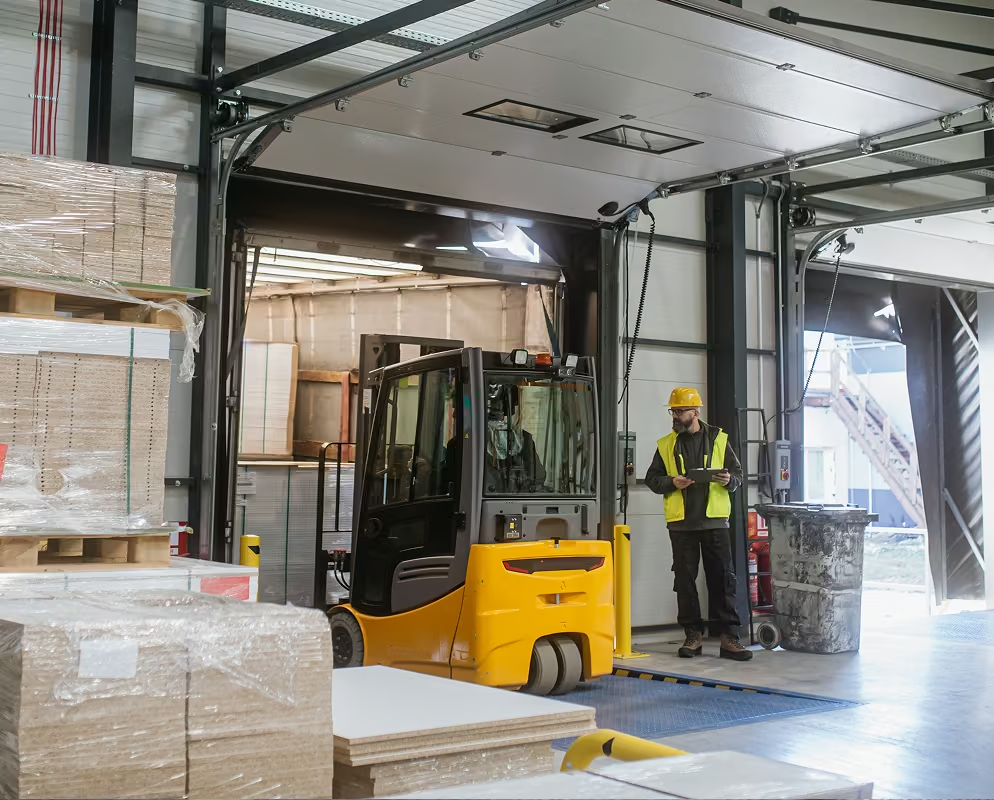

That creates problems like:
- Incorrect dimensions can directly change the freight class, rates, and invoices
- Not understanding shipping and receiving locations and commodity requirements can create unforeseen accessorials
- Traditional rating tools were built around static freight class, not density calculations
One Shipper Reduced LTL Costs by 22% with Wicker Park
A regional manufacturer shipping 300–400 LTL loads per month came to us with rising costs, invoice issues, and inconsistent service.
Predictability for Your LTL Shipping
If your team is spending more time dealing with reclass charges, invoice disputes, or inconsistent transit times, it often starts with how your provider quotes and manages freight.
Let’s start by reviewing your current LTL approach and identifying where we can improve cost, service, and reliability.


